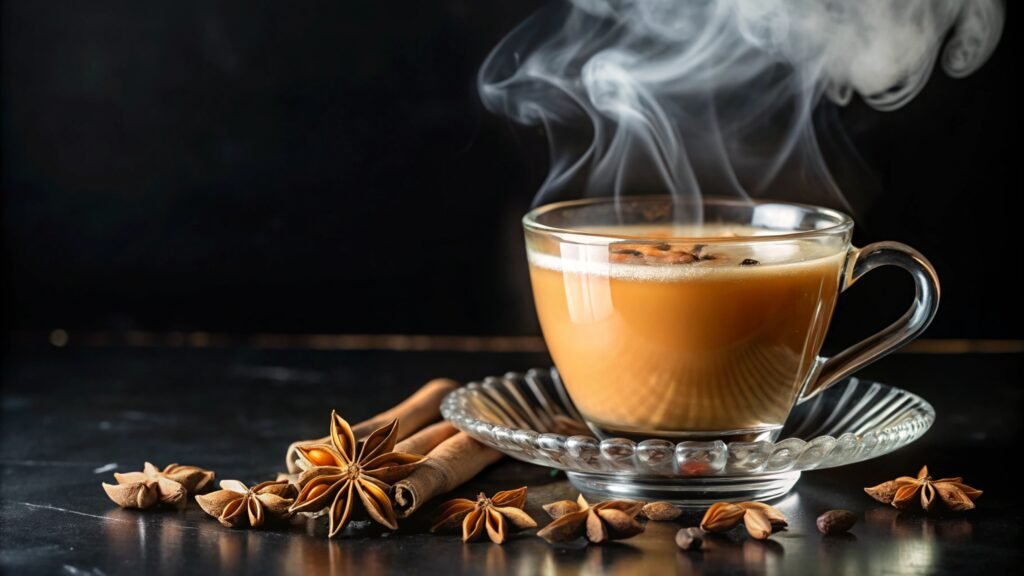
Walk down any street in India, at any hour, and you will find someone holding a small glass of hot, milky, sweet tea. Chai is offered to guests before they sit down. Deals are closed over it. Arguments are settled over it. It feels like it has been there forever.
It has not. The history of chai as India knows it today is barely a hundred years old, and it starts with an empire trying to sell tea to people who did not want it. At Krish’s Indian Bistro in Sewell, NJ, we love a good food story, and this is one of the best. If you enjoy this kind of history, you will also like how butter chicken was invented and why authentic Indian food in Sewell, NJ is worth seeking out.
First Things First: “Chai” Just Means Tea
In Hindi and many other languages, chai simply means tea. The word travelled overland from China, where tea is called cha. So “chai tea” literally means “tea tea”.
The spiced, milky drink most Americans think of is properly called masala chai, which means spiced tea.
Before Tea: The Ancient Spice Brew
Long before tea leaves were involved, Indians were drinking kadha, a hot herbal brew of ginger, black pepper, cardamom, cloves and tulsi (holy basil). It was part of Ayurveda, India’s traditional system of wellness, and was taken for coughs, colds and digestion.
Kadha had no tea, no milk and often no sugar. But the spice blend is the direct ancestor of what goes into a cup of masala chai today.
How the British Brought Tea to India
In the early 1800s, Britain was obsessed with tea and was buying almost all of it from China at great cost. The British East India Company wanted its own supply.
In the 1820s and 1830s, the British learned that a variety of the tea plant was already growing wild in Assam, in India’s northeast, where local communities had long used it. Plantations followed quickly in Assam, and later in Darjeeling and the Nilgiri hills in the south.
By the late 1800s India was one of the largest tea producers in the world. But nearly all of that tea was shipped to Britain. Ordinary Indians hardly drank it. It was expensive, unfamiliar and seen as a foreign habit.
The Campaign That Taught India to Drink Tea
In the early 1900s, tea producers had a problem: too much tea and not enough buyers. So the industry’s trade body, the Indian Tea Association, turned to the huge market on its doorstep.
What followed was one of the biggest marketing drives of its time. Tea stalls were set up at railway stations. Factories, mines and mills were encouraged to give workers tea breaks. Salesmen went door to door giving free demonstrations on how to brew a proper cup, the British way, with a little milk and a little sugar.
It worked. But not quite as planned.
How India Made Chai Its Own
Tea leaves were costly, so street vendors used fewer of them. To make up for it, they boiled the leaves hard, added lots of milk and sugar for body and energy, and threw in the familiar spices from kadha: ginger, cardamom, cloves, pepper.
The tea companies were not pleased. More milk and spice meant less tea sold per cup. But customers loved it. This was no longer a British drink. It was something new, and completely Indian.
Then came a turning point. A processing method called CTC, short for crush, tear, curl, became widespread in the mid-1900s. It turned tea leaves into small, hard granules that were cheap and brewed a strong, dark cup in seconds. Suddenly everyone could afford tea, and it stood up perfectly to milk and spice.
By the time India became independent in 1947, chai was well on its way to being the national drink.
The Chaiwallah: Heart of Every Street
The chaiwallah, the tea seller, is one of the most familiar figures in Indian life. With a single burner, a dented pot and a strainer, he serves hundreds of cups a day to office workers, students, rickshaw drivers and anyone passing by.
In many places chai is still served in a kulhad, a small unglazed clay cup that gives the tea an earthy taste and is simply returned to the soil afterwards. On trains, the call of “chai, chai, garam chai” is the sound of every long journey.
Every Region Has Its Own Chai
- Masala chai: the classic, with ginger, cardamom and other spices
- Adrak chai: heavy on fresh ginger, loved in winter and the rainy season
- Cutting chai: Mumbai’s famous half glass, strong and sweet
- Kashmiri noon chai: pink, salty and creamy
- Irani chai: from Hyderabad’s old cafes, rich and slow-brewed
- Sulaimani: Kerala’s black tea with lemon and spice, no milk
What Goes Into a Good Cup of Masala Chai?
Strong black tea, water, milk, sugar and spice. The usual spices are green cardamom, fresh ginger, cloves, cinnamon and black pepper. Every family has its own balance. The word masala here means a blend of spices, the same idea we explain in our post on the difference between curry and masala.
The key is that everything is boiled together in one pot. Chai is simmered, not steeped. That is why it tastes so much fuller than a tea bag dunked in hot milk.
How to Make Masala Chai at Home
You do not need special equipment to try the real thing. Here is a simple version for one big cup:
- Bring 1 cup of water to a boil with 2 crushed green cardamom pods, a small piece of crushed fresh ginger, 2 cloves and a small piece of cinnamon. Simmer for about 2 minutes.
- Add 1 to 2 teaspoons of strong black tea leaves and simmer for another minute.
- Pour in 1 cup of whole milk and sugar to taste. Bring it up to a gentle boil, and when it rises, lower the heat. Repeat this two or three times.
- Strain into a cup and serve hot.
Do not boil it for too long once the milk is in, or the tea turns bitter. If you like it stronger, add a little more tea rather than boiling longer.
How Chai Went Global
In the 1990s, American coffee shops discovered chai and turned it into the chai latte. It is sweeter and milder than the real thing, and usually made from a syrup, but it introduced millions of people to the flavor. That growing curiosity is part of the wider story of Indian food trends in New Jersey.
If you have only ever had the coffee shop version, a freshly brewed cup of masala chai will be a pleasant surprise. It is bolder, spicier and far less sugary.
Enjoy the Full Experience at Krish’s Indian Bistro
In India, chai is how a meal ends and how a conversation begins. It is especially good after something rich or spicy, and it is the natural partner for a sweet dessert.
Next time you visit Krish’s Indian Bistro, look for masala chai on our menu and finish your meal the traditional way. Planning a party? Ask about adding chai to your catering order or when you book an event with us in Sewell, NJ. You can also reserve a table or order online.