A Meal That Does More Than Fill You Up
There is a moment — usually somewhere between the first bite of a properly made dal makhani and the last torn piece of garlic naan — when you realize the meal you are eating is different from most things you have eaten recently. Not just in flavor, but in how it makes you feel. Full, yes. But also settled. Like the food was made with some actual intention behind it.
That is what eating at Krish’s Indian Bistro in Sewell, NJ tends to do to people. And it is not accidental. It comes from the ingredients, the spices, and the way the kitchen approaches cooking — which has not changed since the restaurant opened and does not look like it is going to.
This piece is about the real benefits of eating authentic halal Indian food. Not wellness buzzwords. Not vague claims about superfoods. Just an honest breakdown of what the food at Krish’s Indian Bistro is made of and why it matters — for your palate, for your energy, and for your understanding of what a genuinely good meal can be.
The Spice Cabinet Is Doing More Work Than You Think
Most people who are new to Indian food think of it as spicy. That is understandable — the reputation precedes the cuisine. But heat and spice are two different things, and Indian cooking is one of the clearest examples of that difference anywhere in the world.
The spices used in Indian cooking — turmeric, cumin, coriander, cardamom, fenugreek, ginger, garlic, star anise, cloves — are not there to light your mouth on fire. They are there because each one contributes something: aroma, warmth, depth, balance, color, and in many cases, genuine nutritional function that has been recognized for centuries.
Turmeric is the most studied of the group. Curcumin, its active compound, has been the subject of significant research around inflammation and cellular health. It is not a miracle ingredient, but it is a legitimate one — and it is in almost everything at Krish’s Indian Bistro, from the biryani to the dal to the curry bases.
Cumin does a similar kind of quiet, structural work. It is in the whole-spice blooms that start almost every dish, and it is in the ground form that goes into masala pastes. It has been associated with digestive support in traditional practice, and it contributes an earthy warmth to food that synthetic flavoring cannot replicate. Same with coriander — both the seed and the fresh leaf show up across the menu, adding brightness and balance in ways that go well beyond seasoning.
Ginger and garlic deserve their own mention. They are the backbone of Indian cooking. Almost every masala starts with them. And both have accumulated a significant body of evidence supporting their role in immune function, digestion, and anti-inflammatory response. Eating them in a properly built gravy at Krish’s Indian Bistro is not the same as taking a supplement. But it is the real thing — whole, fresh, cooked into the food at the right stage of the process.
What In-House Masala Actually Means for the Food You’re Eating
This is worth pausing on. When a restaurant builds its masalas in-house, starting with whole spices and fresh aromatics rather than opening a jar of pre-made paste, the food tastes different. But it is also different in a more fundamental way.
Pre-made masala paste is a convenience product. It is formulated for consistency and shelf life, which means it is also formulated with preservatives, stabilizers, and flavor enhancers that make it behave predictably in a commercial kitchen. What it cannot do is produce the layered, time-built flavor of a masala that started with raw whole spices being bloomed in hot oil and then built up slowly over heat.
At Krish’s Indian Bistro, the masalas are built from scratch every day. The whole spices go into the oil first — you can smell the moment they release their oils if you happen to be near the kitchen. Then the onions, then the ginger and garlic paste, then the tomatoes cooked low and slow until their raw acidity mellows out and sweetens. Then the ground spice blend, incorporated carefully so nothing burns. The whole process takes time that shortcuts simply cannot replicate.
The result is not just better-tasting food. It is food with a cleaner ingredient list — nothing added to extend shelf life, nothing synthetic to round out a flavor that did not develop the right way. The benefits of eating authentic Indian food at Krish’s Indian Bistro begin here, in the masala.
Also Read: 7 Ways Mutter Paneer and Butter Naan Shape the Comfort-Food Scene
The Dal Is One of the Most Nutritionally Complete Dishes in the World
Dal makhani is not the most Instagram-famous dish on the menu at Krish’s Indian Bistro. But ask the regulars — especially the ones who have been coming for years — and it comes up every time.
The dish is slow-cooked black lentils, butter, cream, and a tomato-based masala, finished over low heat for long enough that the lentils lose their structure just slightly and the whole thing becomes rich, creamy, and deeply satisfying. It takes hours to make properly. The version at Krish’s Indian Bistro is the result of those hours, and it shows.
What most people do not fully appreciate until someone points it out is that black lentils are one of the most nutritionally dense plant foods available. High protein, high fiber, low glycemic index — they keep you full for hours without spiking your blood sugar. They are also a meaningful source of iron, folate, potassium, and magnesium.
Eating a bowl of dal makhani at Krish’s Indian Bistro is not a light snack. It is a full meal. And the butter and cream do not change the fundamental nutritional character of the lentils — they just make the dish more satisfying and far easier to eat in the quantities that make the lentils work for you.
Tandoor Cooking: High Heat, Less Fat
The tandoor at Krish’s Indian Bistro is a real clay oven. That distinction matters more than most people realize when they sit down with a plate of garlic naan or a chicken tikka masala.
A tandoor reaches temperatures between 500 and 900 degrees Fahrenheit. Nothing in a standard kitchen comes close. That extreme dry heat is what produces the char on the outside of tandoor-cooked protein — a caramelization of the marinade surface that creates texture and flavor that a pan or a broiler cannot replicate. And because the cooking happens so fast and at such high heat, the protein inside the char stays moist and tender.
Here is the part people often miss: tandoor cooking requires very little added fat. The food is cooked in its own marinade — yogurt, spices, a small amount of oil — and the heat does the work. Compare that to deep-frying or heavy pan-cooking where the fat is doing most of the flavor work, and you start to understand why tandoor-cooked food can be both deeply flavorful and relatively light in terms of cooking fat.
The chicken in the chicken tikka masala at Krish’s Indian Bistro is tandoor-grilled before it goes into the masala sauce. That step is part of why the dish tastes the way it does. But it is also part of why the dish has a cleaner cooking profile than a version made by pan-frying the same chicken.
Also Read: Why Indian Food Trends in New Jersey Are Winning Every Food Lover’s Heart
Halal Food — What the Certification Actually Means
Krish’s Indian Bistro is 100% halal certified. For Muslim families and individuals in Sewell and across Gloucester County, that certification is the baseline. But for everyone else, it is worth understanding what halal actually means for the food you are eating.
Halal standards require that animals are healthy at the time of slaughter, that the process is swift and humane, and that the food is free from prohibited substances. In practice at a restaurant like Krish’s Indian Bistro, halal certification means a supply chain that is held to documented standards — not a marketing label, but a verifiable process that covers sourcing, handling, and preparation.
That level of care in the supply chain tends to correlate with a more careful approach to food in general. And at Krish’s Indian Bistro, that correlation holds. The halal certification is not just a label — it reflects the same discipline that shows up in the in-house masalas, the dum biryani process, and the tandoor cooking.
Conclusion
The benefits of eating authentic halal Indian food at Krish’s Indian Bistro go well beyond a good meal — though the meal alone is worth the visit. The spices are real and functional. The masalas are built from scratch. The lentils are some of the most nourishing food you can eat. The tandoor does what high heat is supposed to do. And the halal certification is backed by genuine kitchen discipline rather than a label slapped on a menu.
South Jersey has been waiting for a restaurant like this. It is here, in Sewell, and it is open Tuesday through Sunday.
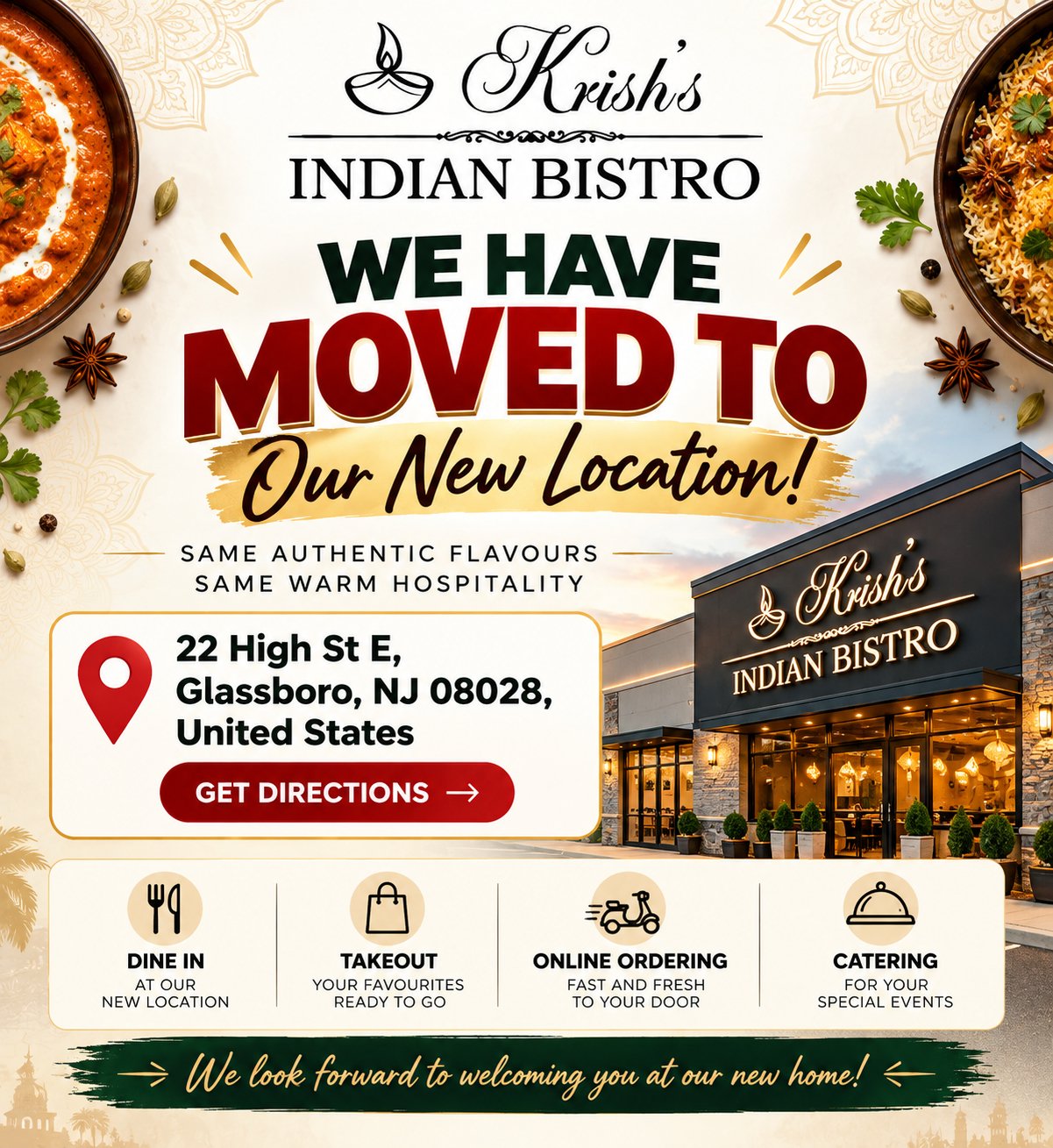
Ready to experience the real benefits of authentic halal Indian food? Visit Krish’s Indian Bistro at 444 Hurffville-Cross Keys Rd, Sewell, NJ — dine-in, takeout, or lunch buffet Tue–Sun. Full menu at krishsindiancuisine.com.