No Indian meal feels complete without bread. Warm, soft, and perfect for scooping up rich curries, Indian breads are as essential to the table as the dishes they accompany. But with so many names on the menu — naan, roti, kulcha, paratha, and more — it’s easy to feel a little lost. This Indian bread guide clears up the confusion, explaining the most popular varieties, how they differ, and which dishes they pair with best. Whether you’re a devoted garlic naan fan or curious about trying something new, understanding these breads will make your next meal far more enjoyable. Let’s break down the delicious world of Indian bread, one variety at a time.
Why Bread Is So Central to Indian Meals
In much of India, especially the north, bread isn’t a side thought — it’s the main vehicle for eating. Instead of cutlery, diners often tear off pieces of bread to scoop up curries, lentils, and vegetables. This makes the choice of bread just as important as the dish itself.
Different breads suit different meals. Some are light and everyday; others are rich and indulgent. Some are baked in a tandoor, others cooked on a flat griddle. Understanding these differences is the heart of any good Indian bread guide, because the right bread can genuinely elevate a meal, complementing the flavours and textures on your plate.
Naan — The Famous Favourite
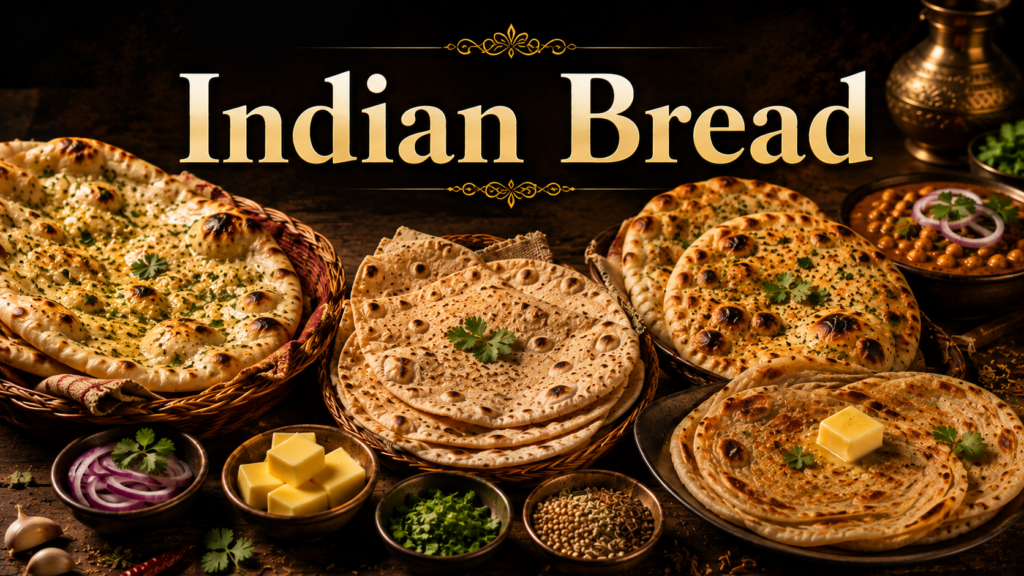
Naan is probably the most recognized Indian bread worldwide. It’s a soft, fluffy, leavened bread traditionally baked in a tandoor, which gives it those signature charred bubbles and pillowy texture. Because it’s made with leavening and often yoghurt, naan is richer and softer than many other breads.
Garlic naan is the superstar of the group — brushed with butter and topped with fresh garlic, it’s aromatic and irresistible. Other popular versions include butter naan, cheese naan, and stuffed naan filled with ingredients like spiced potato or paneer. Naan pairs beautifully with creamy curries such as butter chicken and dal makhani. At Krish’s Indian Bistro, freshly baked naan straight from the tandoor is one of the most popular items on the table, and it’s easy to understand why.
Roti — The Everyday Staple
If naan is the indulgent favourite, roti is the wholesome everyday hero. Also called chapati, roti is a simple, unleavened flatbread made from wholemeal flour and cooked on a flat griddle called a tava. It contains no yeast, no butter by default, and no frills — just soft, wholesome bread.
Because it’s made from whole wheat and cooked without much fat, roti is lighter and considered more of a daily staple than a treat. It’s the bread most Indian households eat with everyday meals. Its mild flavour makes it a versatile partner for almost any curry, dal, or vegetable dish. If you want something simple and wholesome to balance a rich meal, roti is the classic choice.
Also Read: Difference Between Curry and Masala: A Simple Guide
Kulcha — The Soft, Stuffed Delight
Kulcha is a slightly lesser-known gem that deserves more attention. It’s a soft, leavened bread similar to naan but traditionally made with plain flour and often associated with the Punjab region, particularly Amritsar. What makes kulcha special is that it’s frequently stuffed.
Amritsari kulcha, for example, is filled with spiced potatoes, onions, or paneer, then baked until crisp and golden. It’s heartier than a plain naan and can almost be a meal in itself, especially when served with chickpeas (chole). The team at Krish’s Indian Bistro often suggests kulcha to guests who want to explore beyond naan, because its soft texture and flavourful filling offer a delightful change of pace from the more familiar options.
Other Indian Breads Worth Knowing
Beyond the big three, the world of Indian bread is wonderfully varied. A few worth trying:
- Paratha — a flaky, layered flatbread, often stuffed with potato, cauliflower, or paneer, and pan-fried until golden.
- Puri — a small, deep-fried bread that puffs up into a light, airy ball, popular at breakfast and festivals.
- Bhatura — a large, fluffy fried bread famously served with spicy chickpeas as “chole bhature.”
- Missi roti — a flavourful flatbread made with gram flour and spices.
Each of these breads has its own texture, flavour, and ideal pairing. Exploring them is one of the joys of Indian dining, offering variety far beyond the familiar naan and turning every meal into a chance to try something new.
Also Read: What to Order at Krish’s Indian Bistro — A Complete Guide for First-Timers in Sewell, NJ
Which Bread Goes With What?
Pairing bread with the right dish makes a real difference. Rich, creamy curries like butter chicken, korma, and dal makhani are best mopped up with naan, whose softness and slight richness complement the gravy. Lighter, everyday dishes such as simple dals and vegetable curries pair naturally with roti.
Stuffed breads like kulcha and paratha are hearty enough to shine alongside simpler accompaniments — kulcha with chickpeas is a classic combination. And fried breads like bhatura are practically married to spicy chole. When in doubt, naan is a safe, universally loved choice, but experimenting with different breads is a delicious way to discover new favourites.
How to Order Bread Like a Pro
Ordering Indian bread becomes simple once you know the basics. Craving something soft, rich, and indulgent? Choose garlic naan or butter naan. Want a lighter, wholesome option? Go for roti. Fancy something stuffed and hearty? Try kulcha or a paratha. And if you’re feeling adventurous, order a couple of different breads to share and compare.
A good tip is to match your bread to your curry — richer breads with richer dishes, lighter breads with lighter ones. This simple approach ensures every bite pairs perfectly, and it turns an ordinary meal into a well-rounded, satisfying feast.
Conclusion
Indian bread is so much more than a side — it’s an essential part of the meal, with a variety that can transform how you experience every dish. From the soft, charred bubbles of garlic naan to the wholesome simplicity of roti and the stuffed richness of kulcha, each bread brings its own character to the table. With this guide in hand, you can order confidently and pair your bread perfectly with whatever you’re craving.
Ready to tear into some warm, freshly baked bread? Come dine at Krish’s Indian Bistro and taste our tandoor-fresh naan, roti, and kulcha.