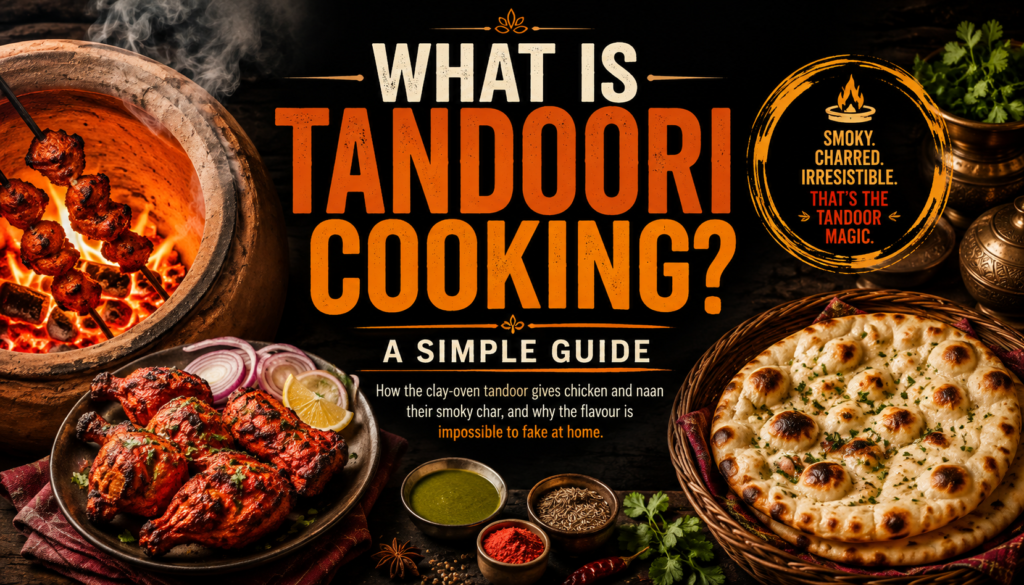
If you’ve ever wondered why tandoori chicken has that unforgettable smoky char, or how naan gets those beautiful blistered bubbles, the answer lies in one ancient piece of equipment: the tandoor. Tandoori cooking is one of the oldest and most beloved methods in Indian cuisine, and it’s responsible for some of the most iconic dishes on any menu. Yet many diners enjoy these dishes for years without ever knowing what “tandoori” actually means. This guide explains what the method really is, how the tandoor works, and why it gives chicken, naan, and countless other dishes a flavour that simply cannot be recreated in an ordinary oven.
What Exactly Is a Tandoor?
A tandoor is a large, cylindrical clay oven, traditionally buried partly in the ground or set into a counter. It’s fired by charcoal or wood at the base, and it reaches extremely high temperatures — often between 400°C and 480°C. That intense, dry heat is the secret behind everything that comes out of it.
The clay walls absorb and radiate heat evenly, while the live fire at the bottom adds smoke and char. This combination of radiant heat, direct flame, and smoke is what defines the whole method. It has roots across South and Central Asia going back thousands of years, and it remains central to Indian kitchens today precisely because nothing else delivers quite the same result.
How Tandoori Cooking Works
The magic of tandoori cooking comes from speed and heat. Because the oven is so hot, food cooks very quickly. Meat sears on the outside, locking in juices, while the smoky air infuses it with flavour. The result is a dish that is charred and slightly crisp on the surface yet tender and moist inside.
Meats are usually skewered and lowered vertically into the tandoor, so they cook from all sides at once. Breads like naan are slapped directly onto the hot clay walls, where they puff up and blister in seconds. This dual ability — roasting meats and baking breads in the same fierce heat — is what makes the tandoor so versatile and irreplaceable.
The Role of the Marinade
The method isn’t just about heat; the marinade is equally important. Before meat ever touches the tandoor, it’s soaked in a mixture of yoghurt and spices, often for several hours. The yoghurt does two crucial jobs: its acidity tenderizes the meat, and it helps the spices cling to every surface.
Classic marinades include ginger, garlic, cumin, coriander, garam masala, and chilli, along with ingredients that give the dish its signature warm colour. When this marinated meat hits the searing clay oven, the yoghurt coating chars beautifully, creating that distinctive crust. At Krish’s Indian Bistro, this marinating step is never rushed, because a proper soak is the difference between chicken that’s merely grilled and chicken that’s truly tandoori.
Why Tandoori Chicken Tastes So Good
Tandoori chicken is the dish most people associate with this style, and for good reason. The high heat gives the outside a smoky, slightly crisp char while sealing the juices inside, so the meat stays succulent. The yoghurt marinade keeps it tender, and the spice blend delivers deep, layered flavour in every bite.
Crucially, that smoky taste comes from the live charcoal fire — something a regular kitchen oven simply cannot replicate. It’s why tandoori chicken cooked in an authentic tandoor always tastes different from an oven-baked version at home. The combination of char, smoke, spice, and juiciness in a single piece of chicken is exactly why this dish has travelled the world and remains a firm favourite everywhere.
How the Tandoor Makes Naan Special
Naan is the other star here. The soft dough is stretched by hand and pressed onto the scorching inner walls of the tandoor, where it bakes almost instantly. The intense heat creates those signature golden bubbles and charred spots, while the inside stays soft, chewy, and pillowy.
This is why authentic naan has a texture that’s impossible to achieve in a standard oven or on a stovetop. Garlic naan, butter naan, and stuffed varieties all rely on the same principle — the clay walls do the work in seconds. The team at Krish’s Indian Bistro often points out that freshly made tandoor naan, eaten warm, is one of the simplest yet most satisfying pleasures Indian cuisine has to offer.
Beyond Chicken and Naan
While chicken and naan get the spotlight, this technique extends far beyond them. Paneer tikka, seekh kebabs, tandoori prawns, tandoori vegetables, and marinated lamb all benefit from the same fierce heat and smoky character. Even breads like roti and kulcha can be cooked in the tandoor.
Vegetarians are far from left out — paneer and vegetables take on a wonderful char and smokiness that transforms them completely. This versatility is a big part of why the tandoor remains the beating heart of so many Indian kitchens. One oven, countless dishes, all sharing that unmistakable signature of smoke, spice, and perfectly managed heat.
Also Read: Authentic Beef Tikka Masala Recipe for Meat Lovers
Why It Can’t Be Faked at Home
You can marinate chicken exactly the same way at home, but without a real tandoor, the result is never quite identical. Home ovens and grills don’t reach the same searing temperatures, and they can’t reproduce the charcoal smoke that defines authentic tandoori cooking. You can get close, and home versions are still tasty, but the true experience depends on that traditional clay oven. This is precisely why so many people prefer to enjoy these dishes at a restaurant, where a genuine tandoor delivers the char, smoke, and texture that make them legendary.
Conclusion
Tandoori cooking is far more than a label on a menu — it’s an ancient technique built around a clay oven, live fire, and a clever yoghurt marinade. Together they create the smoky char, juicy interiors, and blistered breads that make dishes like tandoori chicken and fresh naan so unforgettable. The intense heat, the direct flame, and the spice-rich marinades all combine to produce flavours no ordinary oven can match. Now that you understand what’s happening inside that fiery clay pot, every bite will make a little more sense.
Curious to taste what a real tandoor can do? Visit Krish’s Indian Bistro and let our tandoori dishes speak for themselves.