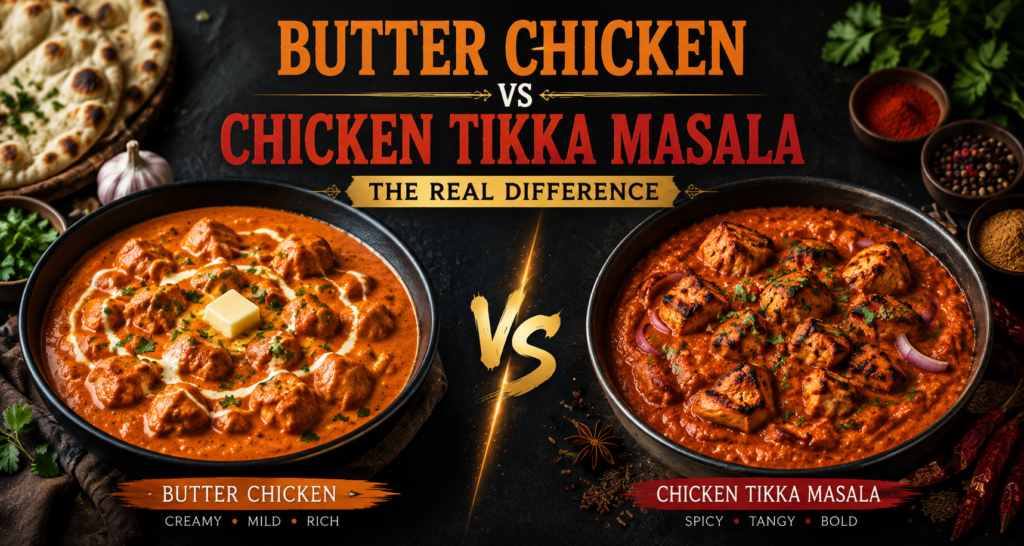
Few dishes cause more friendly debate at an Indian restaurant than these two. Both arrive creamy, orange, and irresistibly rich, so it is completely understandable that diners often confuse them. In fact, the question of butter chicken vs chicken tikka masala is one of the most common things guests ask before ordering. On the surface they look like twins, but taste them side by side and the differences become clear — in flavour, texture, origin, and even attitude. This guide walks you through exactly what sets them apart, so the next time you scan a menu, you’ll know precisely which creamy classic suits your mood. No culinary degree required, just a little curiosity and an appetite.
Where Each Dish Comes From
Butter chicken, or murgh makhani, was born in Delhi in the 1950s. The story goes that cooks at a famous restaurant tossed leftover tandoori chicken into a rich tomato-butter gravy to keep it from drying out — and a legend was created. It is proudly, unmistakably Indian in origin.
Chicken tikka masala has a murkier and more debated history. Many believe it was invented in Britain, when a chef added a spiced, creamy tomato sauce to grilled chicken tikka for customers who wanted more gravy. Whether it began in the UK or India, it became the flagship of Indian restaurants across the West. So while both share Indian roots, one is a Delhi original and the other a global adaptation that conquered menus worldwide.
The Chicken Itself
Both dishes start with boneless chicken that is marinated in yoghurt and spices, then cooked in a tandoor or grill. That grilled, slightly smoky chicken is called “tikka.” So far, identical.
The difference begins with what happens next. In butter chicken, the tandoori chicken is simmered gently in the sauce so it becomes soft and almost melts into the gravy. In chicken tikka masala, the grilled tikka pieces are usually added later and retain a firmer, chunkier, more distinct bite. If you love tender, falling-apart chicken, butter chicken wins. If you prefer defined, grilled pieces, tikka masala has the edge.
Also Read: Difference Between Curry and Masala: A Simple Guide
The Sauce — Where It Really Changes
This is the heart of the butter chicken vs chicken tikka masala question. Butter chicken sauce is smooth, mild, and luxuriously creamy. It leans on tomatoes, butter, cream, and a delicate hit of fenugreek, with a subtle natural sweetness. The spice level is gentle, letting the richness take centre stage.
Chicken tikka masala sauce is spicier and more robust. It carries a bolder masala blend — more cumin, coriander, paprika, and chilli — giving it a deeper, tangier, more savoury punch. It is still creamy, but it fights back with warmth and spice rather than melting into sweetness.
In short: butter chicken soothes, tikka masala excites. One is a warm hug; the other is a lively conversation. Both are delicious, but they aim for very different feelings on the palate.
Colour, Texture and Look
To the untrained eye they look the same, but there are tells. Butter chicken usually has a paler, orange-gold, glossy sauce with a velvety, uniform texture — almost like a rich soup. Chicken tikka masala tends to be a deeper red-orange, often slightly thicker, and sometimes flecked with visible spices, peppers, or onions.
At Krish’s Indian Bistro, guests often notice that once they know these small visual cues, they can guess which dish is which before the first bite — and that little bit of knowledge makes ordering far more fun.
Spice Level and Who Each Suits
If you are new to Indian food or cooking for children, butter chicken is the safer, gentler choice. Its mild, creamy profile pleases almost everyone and rarely overwhelms.
Chicken tikka masala suits diners who want a little more excitement — a touch of heat and a bolder, tangier flavour without going fully spicy. It sits comfortably in the middle of the spice spectrum. Neither dish is aggressively hot by default, which is exactly why both became worldwide favourites. The kitchen team at Krish’s Indian Bistro can adjust the heat on either dish, so whether you want it whisper-mild or with a real kick, you’re never locked into one setting.
How to Order Like You Know
Ordering becomes simple once you know your preference. Craving something creamy, sweet, and comforting? Ask for butter chicken. Want something with more spice, tang, and personality? Go for chicken tikka masala. Both pair beautifully with naan, and both work well with plain or jeera rice to balance the richness.
A good tip: if you’re sharing, order one of each. Placed side by side, the contrast is obvious and delicious, and everyone gets to compare. It’s the easiest way to finally settle the butter chicken vs chicken tikka masala debate at your own table, with your own taste buds as the judge.
Also Read: 5 Reasons Krish’s Is the Best Halal Indian Restaurant in South Jersey
Which One Is “Better”?
Honestly, neither. Asking which is better is like asking whether you prefer a calm evening or a lively night out — it depends entirely on your mood. Butter chicken is the comfort classic, endlessly loveable and crowd-pleasing. Chicken tikka masala is the bolder cousin, full of character and warmth. Great cooking respects both. The best approach is to try each, notice what you gravitate toward, and let your own palate decide the winner rather than the internet.
Conclusion
So, the butter chicken vs chicken tikka masala mystery comes down to a few key things: origin, texture, and above all, the sauce. Butter chicken is milder, sweeter, and creamier, with tender chicken that melts into the gravy. Chicken tikka masala is spicier, tangier, and bolder, with firmer grilled pieces and a punchier masala. Both are creamy, both are iconic, and both deserve a place on your plate at least once. Now you can order either with total confidence.
Ready to settle the debate the best way possible — one delicious bite at a time? Book a table at Krish’s Indian Bistro and try them side by side tonight.